
MPC vs PID – A Comprehensive Control Method Comparison
Control systems play a crucial role in various industrial processes by ensuring stability, efficiency, and optimal performance. Among the myriad of control methods available, Model Predictive Control (MPC) vs Proportional-Integral-Derivative (PID) stand out as two competing strategies. In this article, we delve into the intricacies of each method, compare its

What is Process Control?
Process control refers to the monitoring and adjusting of process parameters to get a preset or desirable output.

Efficiency of Gas Turbines
Explore the concept of efficiency of gas turbines, how to calculate it, and ways to improve turbine efficiency.

The Petrotech Solution to New York’s NOx Emissions Limits
NOx, or nitrogen oxides, is a term used to describe a family of seven chemical compounds made up of various combinations of nitrogen and oxygen that contribute heavily to air pollution. Some of these compounds are air pollutants in and of themselves, while others cause pollution when they react with

Why Is the IEC 61131 the Standard Programming Language in Open Architecture Control Systems?
First released in 1993, the International Electrotechnical Commission’s IEC 61131 programming standard remains a key element in the programmable logic controllers (PLCs) used in a variety of industries across the globe. The IEC 61131 standard is especially useful in Open Architecture control systems, which use standard programming languages to operate

The Difference Between Isochronous and Droop Control Modes
The main difference between droop and isochronous control modes lies in their relationship to frequency. In isochronous mode, generators maintain a constant frequency, whereas droop mode allows for changes in frequency in response to changes in load. This guide explains the implications of these differences and applications of the two

Turbomachinery Control Solutions: Building an Effective TCS
A mechanical engineering term, “turbomachinery” describes machines that transfer energy between a rotor and a liquid or gas. Turbines and compressors both fall into this category. Turbines use a fast flow of water, air, or gas to generate shaft power; while compressors pressurize substances by transferring energy from the rotor

Stand-Alone Product Spotlight: EM-400 Multi-Body Anti-Surge Compressor Controller
Plant operators shouldn’t have to continually monitor or adjust their compression system to maintain optimum air mass flowrates. If a plant’s compression and surge control system is antiquated, it can cause delays in operation times, ultimately resulting in potential lost net gains. Both axial and centrifugal compressors are susceptible to

The Features and Functions of Reciprocating Engines
Powerful, efficient engines of many types supply the energy needed to deliver electricity or drive in the energy supply sector. The oil and gas industry uses combustion engines in three primary markets: power plants, compression, and pumping. In power plants, the engines burn fuel that cannot be used in turbines;

A Guide to Operating Efficiently With Steam Turbine Oil
In addition to being subject to tough environmental standards, tight budgets, and penalties for supply interruptions, today’s power companies must ensure efficient and reliable operations to keep up with high demand. This means that power-generating turbines often run under more intense conditions than ever, including 24/7 cycles and frequent stopping

What Is the Function of a Hydro Turbine Control System?
In run-of-river hydroelectric plants, it’s essential that the amount of water flowing in the river is properly controlled by a plant control system by varying the hydro turbine generator output and spill gates. Without this control, backups are bound to ensue, leading to costly inefficiencies and environmental impacts. The Birth
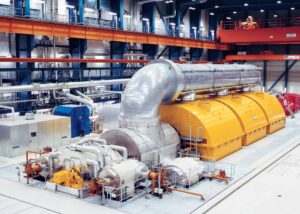
What Is the Function of a Governor in a Steam Turbine?
A steam turbine governor is a component of the turbine control system that regulates rotational speed in response to changing load conditions. The governor output signal manipulates the position of a steam inlet valve or nozzles which in turn regulates the steam flow to the turbine. In this post, we’ll